

The Curious About Everything Newsletter #61
The many interesting things I read in March 2026
Welcome back to the Curious About Everything Newsletter! CAE 60 is here, if you missed it. The most popular link from last month was Colin Gorrie’s post on how far back you can understand English in all its iterations.
Things I wrote this month
I wrote a post about how after reading a paper on the topic, I’ve been taking very small doses of a GLP-1 receptor agonist medication, well below the standard starting doses normally prescribed. I wanted to see if doing so could temper reactions caused by mast cell activation syndrome. I didn’t have high hopes for this microdose, but it’s been very helpful. I wrote about my experiences on my JE site, with a long list of references at the bottom.
I wrote a post about memory and identity after chronic illness, and shared some overflow reads from CAEs 59 and 60 on my Patreon.
I finished my celiac’s guide to Croatia, and it’s up on Legal Nomads
I redid my post about the history of fish sauce, because it turns out that what we called garum from Roman times was not actually the predecessor to today’s fish sauce — it was a goopy bloody ferment from blood and viscera of fish. It’s liquamen that was the actual predecessor, though as I note fish sauce may very well have been developed in both the East and the West independently, with roots in Ancient Greece and Ancient China alike.
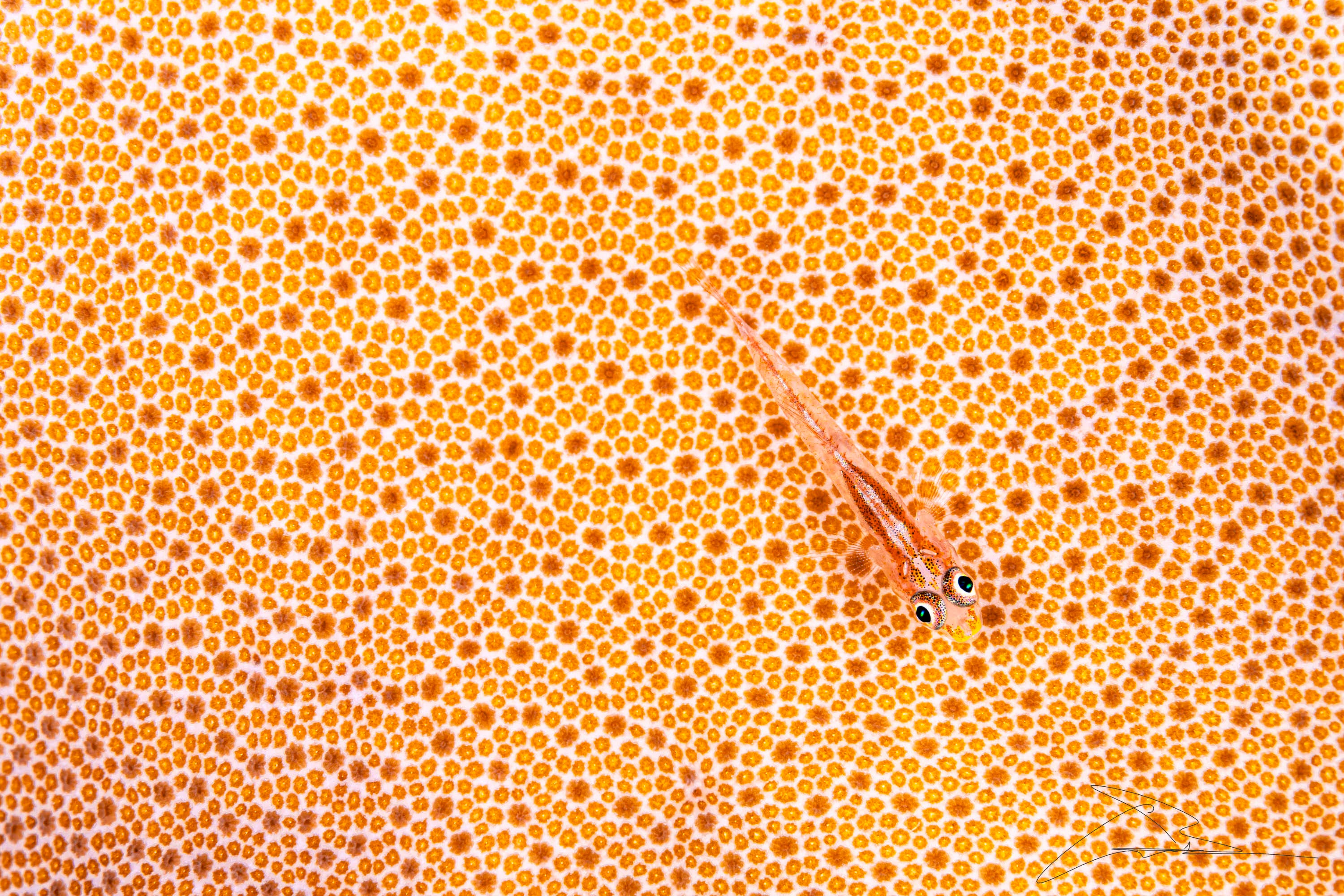
Featured art for CAE 61
CAE 61’s featured artist is Simon Biddie, whose photo Ghost of the Reef below delighted me. An underwater diver for decades, it was only in 2022 that he blended his love of photography with the deep seas. This photo of a goby fish camouflaging into surroundings won a Siena International Photo Award last year. Goby are cryptobenthic fish, tiny species that live in the nooks and crannies of coral reefs. You can find Simon’s work on Instagram, or on his website.

The most interesting things I read this month
Start here:
Start here for my faves, then fill up your browser tabs with the pieces below.
🐶 Major Complications Associated With Cerebrospinal Fluid Collection in 11 Dogs: Clinical Presentation and Imaging Characteristics Did you know that CSF is collected from dogs, just as in humans? Me neither. In dogs, CSF typically is collected from a puncture higher up in the spine and under general anesthesia using an aseptic technique. As with humans, this study notes that it is “generally is considered a relatively safe and non-invasive procedure”, which — sigh, yes ok, but for those of us it where complications occur, it’s not simple. Setting aside my almost 9 years of chronic spinal CSF leak this study notes that while “major” complications were low, mortality in the dogs that did have complications was high. No mention of atraumatic needles, and a brief mention of post-dural puncture headache; for the latter, that it’s not yet recognized in dogs in part because of the “challenges of definitively identifying headache”. I mention this because when I first sustained my leak, a reader wrote me to say their dog had a CSF leak, and she knew because he kept lying down and would wince and whine (she thought in pain) when upright. Investigations by their vet did lead to treatment (surgical) for a leak, and the dog was healthy after. I’ve never forgotten her message, and it’s the first thing I thought of reading this. Also, imagine a CSF leak in a giraffe?! Yes, giraffes too do have CSF — and a very different gravitational pressure issue because of their their long necks. (Giraffes have a mean arterial blood pressure of roughly 200 mmHg, which in humans would represent a hypertensive crisis. Scientists think it’s this high to maintain cerebral perfusion pressure at the cranial end of the carotid arteries when the head is held upright.) Journal of Veterinary Medicine
🥘 Miso is Not a Soup. Delightful essay by Marc Matsumoto, who shares his own experience of growing up in the USA with a Japanese mother before eventually moving to Tokyo. He writes of miso as not just a soup ingredient, but rather universal (and underused - at least here in North America!) seasoning, one just as fundamental as salt or soy sauce. You know I love a piece with some science, and in this one he talks to us about what makes miso so special. Although there are dozens of miso types, “at its core, most miso is made of soybeans, salt, water, and kōji.” And it’s in the kōji that “the magic happens”: it is a mould cultivated on rice or barley that produces proteolytic enzymes that break proteins into amino acids and convert starches into natural sugars. Miso is versatile as ever, too; it can be used in marinades, glazes, as a condiment, or an emulsifier in both Japanese cooking but far beyond. And pairs very well with some sweets. You’ll be inspired and hungry after you read. My lingering sadness is that I can’t tolerate miso any longer with my fickle immune system. Maybe one day I’ll get it back, along with my beloved fish sauce. Marc Matsumoto
💔 I Stumbled Across My Boyfriend’s ChatGPT and It Ended Our Relationship. Oof, this essay. On accident, Lindsey Hall stumbled onto a her boyfriend’s AI history, and in a series of chats read how he was plagued with doubts both about their relationship, but also about her as a person. These were deeply personal musings that made me wince when reading them, about her body, her eating disorder history, her cats, her nomadic past, and, most heartbreakingly, an admission that he was “just not proud of her.” I can’t imagine how it feels to read such sterile cruelty in prose about someone you think and hope loves you to the moon and back. Hall writes about how reading the logs shattered the “protective blur” that makes intimacy possible in the first place. Even months later, after of her boyfriend’s pleas and effort, she couldn’t forget about what she read. Does anyone want to remain with a partner who is “in some private chamber of himself, unconvinced”? Perhaps some would, but I’d rather be solo. While the piece acknowledges her violation of her partner’s privacy, it does gloss over how that may make him feel. Still, this is her side of the story and was very well written. In finding out the ‘mortifying ordeal’ of being known by him, she ultimately concludes that some knowledge, once encountered, simply cannot be erased from our minds. Lindsay Hall Writes
🎵 Singing Teachers for Honeyeaters. Donna Lu’s short piece was super interesting, and I had to share it here. She reports on how researchers have successfully restored the lost song of the regent honeyeater, a critically endangered Australian bird now down to less than 250 birds in the wild. What I found surprising is that as the species declined, the complexity of its song declined with it: the typical call was replaced by a simpler version that had half the syllables. Researchers feared that this change could have negative consequences on the bird’s ability to reproduce, so they recruited two wild-born male honeyeaters as teachers, putting small groups of younger birds from a captive breeding program at Taronga Zoo in Sydney in their company. With small groups, the younger birds found success and went from 0% knowing the wild song to 42% — all within 3 years. Thankfully, zoo-bred birds who learned the complete song have since passed it on to the next generation, and some have already been released into New South Wales and Victoria. bioGraphic
🧠 Notes on Managing ADHD. There’s a joke in here about how people with ADHD have been given a how-to post of over 6,500 words. But it’s a great primer worth bookmarking, even if you don’t have the condition. It is divided into two sections, strategies for a “high-level control system”, and tactics for smaller-type improvements. For people with ADHD, the literature has shown us that the condition isn’t caused by a lack of willpower, but rather a wiring difference in the patients’ brains. Borretti’s guide talks about combining pharmacological treatment with carefully designed external scaffolding to get shit done. For those not interested in medication, this may not appeal; he does, however, argue that medication is the foundational “unlock” in the system, making the rest of the toolkit accessible. He also frames personal growth as a dialogue between internal changes like medication, meditation, therapy and external changes like to-do lists, calendars, or journaling. As your own dialogue between internal and external changes progress, he writes about how you can ‘unlock’ the next thing in the sequence of management. It’s very detailed, very practical, and provides many of different suggestions and templates for living with the condition. It’s his own findings after years of management, but as someone who often talks about me being a n=1, I loved reading about someone else’s version for something I haven’t written about myself. Boretti
🖤 Letting Go and Hanging In. A quietly moving essay from one of the people I love most in the world: food writer and cookbook author Naomi Duguid. The piece was written as she moves into the second year of a Substack she began partly as an anchor while her incredible son Tashi underwent palliative treatment for a brain tumour. He died in late November of last year, and since then she has been writing about many things, part of them being the ways in which she is living and feeling in a world transformed by her grief. The article talks about a brief trip to Ottawa (to see me, and other friends); she writes about the trip as a necessary departure from the patterns currently miring her in grief. After our visit, during which we both cried copiously, it is beautiful to read about the unexpected gift the trip gave her: a loosening of the striving she hadn’t fully realized she had been clutching to for months. She returned home to Toronto “very inept, fumbly, without reflexes, as if I’d been away a year rather than just 3 days”, unable to muster her usual attentiveness. Instead of trying harder, she finds relief in letting a visiting friend cook instead. It can be easy to forget how nourishing it is to simply receive care rather than provide it, but when we’re drowning it can also feel like an impossible task to ask. Gorgeous writing, ending on the tentative first tips of rhubarb and tulip leaves pushing through the soil outside, a return of spring. “It’s OK to weep and grieve, to be distracted and fuzzy,” she writes. “And it’s possible, in fact necessary, at the same time to celebrate the return of spring.” Home & Elsewhere
🇻🇳 The purist’s guide to phở in Hanoi. I shared David Farley’s piece about phở in CAE 56, and this piece from Connla Stokes is a wonderful extrapolation from someone living in Vietnam for many years. Structured in chapters, with history and references and even a glossary of terms for what you’ll find in the soup (man did reading it make me homesick for a country I thought I’d be living in far far longer than I did), it’s worth your time. In the history section, Stokes goes through phở’s contested origin, noting that it is neither French pot-au-feu nor Cantonese beef noodles, but most plausibly created on the river docks of early twentieth-century Hanoi. Hanoi phở is built around a clear, delicate, broth-focussed bowl; it has minimal garnishes and little of the hoisin or sriracha condiments more typical in southern Vietnamese bowls. The writing is engaging, and I really appreciated the background and Vietnamese literary references throughout. For those less familiar with what defines northern-style pho, it’ll make you look at your next bowl a little differently. “If you were told you could have only one more bowl of phở in your life,” Stokes writes in the introduction, “a bowl where every detail is exactly right: a generous tuft of noodles, soft and delicate; the meat tender; the broth clear and gently sweet, touched with a hint of ginger and the faintest whisper of fish sauce – your thoughts would surely drift, sooner or later, back to Hanoi.” A Story from Connla
😿 My Husband Had Brain Surgery, and the Cat Isn’t Handling it Well. A warm and funny essay about Jane M. Flynn’s husband and his deep brain stimulation surgery for essential tremor, told mostly through the eyes of their black cat, Bandit. Bandit, as the title notes, is not coping well. Within is also an interesting review of the surgery itself and her husband’s recovery, but the cat is the focus because Bandit remains pissed. His entire emotional universe is organized around her husband, from nightly cuddles to morning supervision of shaving and dressing (and an exclusive preference for the water in his bathroom sink). With doctor’s orders prohibiting contact with fur during healing, Bandit is out of luck and acting out. Eventually, her husband will be recovered enough to pick up the cat again, but for now — at the time of writing — Bandit is still sharpening his claws on their pillows. Crow’s Feet: Life As We Age
🗃 Google Has a Secret Reference Desk. Here’s How to Use It. You may have seen this very useful post floating around in your inboxes, but if not: it’s worth a read. Hana Lee Goldin, a librarian with a Master of Library and Information Science degree, shares with the masses just how Google buried a set of excellent search tools that most users never find because Google does not really care for us to know them. What we do know is that the search bar has fairly effectively replaced the library reference desk without replacing the librarian’s skills. And also that the results we see are heavily filtered. So much so, that two people searching identical phrases the same day may get different results. “Most people have no frame of reference for what a less mediated search experience would even look like”, Goldin writes. And that’s where she comes in. I wont go through all her tricks and tips here, though I will say I now use ‘verbatim mode’ at all times. Just bookmark her piece and put what you need in action. Her “what not to do” section is also very valuable, noting that the AI-generated summary at the top of many Google results is the feature most likely to be wrong and most likely to present that wrongness with complete confidence (she backs this up with examples). Enjoy! Card Catalog
😭 The Tragedy of Mrs. Dr. Seuss. Like many people I know, I grew up on a steady diet of Cheerios (little did I know I was celiac!) and Dr. Seuss books. As an adult, I was horrified to learn that while his books were creative and wonderful, his personality was not. For the unaware, this is the story of how his wife, Helen Marion Palmer Geisel, was largely written out of his life story, including how much she helped make him a success. She redirected the directionless Ted Geisel (Dr. Seuss’ real name) toward illustration. She edited his work, managed his emotional needs, co-ran Beginner Books (their imprint), and published 14 inventive books of her own — all while living in chronic pain following a near-fatal case of Guillain-Barré syndrome in 1954. In a tale as old as time, as Ted’s career finally took off she gave up her own writing entirely to support his and to take care of him. He did not know how to make coffee, cook, or even manage a chequebook. When her health worsened (and her value to Ted as support system declined), he began an affair with their close friend Audrey Dimond, who was 23 years younger than Helen. A month before her fortieth wedding anniversary, Helen died by suicide, leaving a note that began “Dear Ted, what has happened to us?” Even then, Brown observes, she carefully protected Ted’s reputation. A few months later, Ted married Audrey and went on to write more beloved books. Dr. Seuss’s biographers have basically taken Ted’s side in their writing; they ignore Helen’s beautiful writing, and frame the affair as “inevitable”. Dispatches from the Rare Book Trade
The rest of the most interesting things I read this month:
🦟 Early hominin arrival in Southeast Asia triggered the evolution of major human malaria vectors. Interesting new paper that associates Southeast Asia’s malaria carrying mosquitoes with the arrival of early human ancestors in the area. Using large-scale genetic analysis and molecular dating to look at the evolutionary origins of the Anopheles mosquitoes responsible for transmitting human malaria in Southeast Asia, researchers found that these mosquitoes originally fed on non-human primates in Sundaland (the ancient landmass encompassing present-day Malaysia, Borneo, Sumatra, and Java), and only later developed a taste for human blood. But they didn’t develop a preference for human blood in response to modern Homo sapiens. Instead, the paper notes that it was in response to the arrival of Homo erectus, around 1.8 million years ago. The timing lines up with when early hominins (like Homo erectus ) were thought to have arrived in SEA, and provides a really interesting — and unusual! — type of independent evidence outside archeology that supports the fossil records we do have of their migration. Cool to see mosquito evolution filling gaps in what we theorized via other fields. Scientific Report
💸 Shy Girl: The Background to the New York Times Story. Publishing industry consultant Thad McIlroy’s piece is a play-by-play of his claim that he broke the year’s biggest literary story, but The New York Times took the credit for it. The story was about a much-anticipated horror novel called Shy Girl by Mia Ballard that had rumours swirling on social media about how it may have been written with the assistance of AI. McIlroy notes that he learned about the allegations, obtained a copy, ran it through multiple detection services, and found that Pangram concluded that 78.4% of the document was AI-generated (a finding that was confirmed by two other services). He then brought the story to the Times, worked with reporter Alexandra Alter over five weeks, and was assured he would be credited as the source. Instead, he received little more than a passing mention in the published piece. Hachette then cancelled the book within a day of being notified by the Times. Ballard wrote online that “this controversy [about Shy Girl] has changed my life in many ways and my mental health is at an all-time low and my name is ruined for something I didn’t even personally do.” McIlroy argues that cancellation was not Hachette’s only option, and was heavy handed. So did Ballard write the book using AI? She denies that she did, and has indicated she is pursuing legal action. I shared on IG this week that I received a few messages accusing my GLP-1 piece of being written by AI. It isn’t, but as friends and I who’ve been writing online for decades often say AI WAS TRAINED ON US. Are AI detectors accurate? I can’t say, but it’s a sobering thought if they aren’t, given the reaction in the court of public opinion. Future of Publishing
🥦 How an unappetizing shrub became dozens of different vegetables. It feels like every month I share a Works in Progress link. Truthfully, the pub has become one of my favourites. This time, I’m posting a deep dive into … cabbage. Yes, cabbage. Wild cabbage is deeply unappetizing, consisting of what Alex Wakeman calls “some untidy leaves and a few thick, coarse stems on the browner side of purple”. Yet this one scraggly plant has given us so many riches: cabbage, kale, broccoli, Brussels sprouts, cauliflower, kohlrabi, gai lan, bok choy, and collard greens among them. Through thousands of years of selective breeding, Brassica oleracea has been unusually adaptable. But why? Wakeman explains that while most plants have a single useful element (for example, wheat has grains, tomatoes have fruit), wild cabbage has many. Its leaves, buds, stalks, and inflorescences (flowers on its stalk) are all edible and all independently breedable. Ancient farmers who selected plants with denser layers of leaves created modern cabbage and kale by around 400 BC. It was 13th century Belgian farmers breeding for large edible buds who created Brussels sprouts. Others focused on the inflorescence (new fave word) to produce cauliflower and broccoli. The genomic explanation is “polyploidy”, the heritable condition of possessing more than two complete sets of chromosomes. Basically: ancient wild cabbages underwent chromosome duplication, giving them multiple backup copies of every gene, meaning that they tolerate much richer genetic diversity with lower risk of harmful mutations. Works in Progress
🤡 March, 19-21: God is a comedian. A darkly humorous and genuinely alarming dispatch from an anonymous financial and geopolitical writer that catalogues what was going on 3 weeks into the US-Iran war, written in the style of a man watching a house burn down and narrating it with meticulous (and horrified) precision. Yes, we’re weeks later now, but the way it’s written makes this piece still worth a read in its description a war “already operating at maximum absurdity”. Looking at how the press is currently reporting Trump’s attacks on Pope Leo, also absurd is how that maximum absurdity is being framed in the media, normalizing Trump. With inventory of early catastrophes and Trump’s many off-the-wall contradictions, it may make you laugh at first but of course it’s not fiction, it’s our ever-devolving world, and nothing happening is a joke. For those like me who spent the last 10 days in awe and tears and wonder at the Artemis II mission, all of the documented mess in this piece is the opposite of that. Gold and Politics
🇮🇷 Iran Is Winning the AI Slop Propaganda War. I know, I know, we’re on an AI theme this month. Don’t worry, next month is going to be full of Outer Space Realness. This time, a read by Matthew Gault about the AI propaganda gap opening up between Iran and the USA during the Iran war incited by the States. Iran’s AI-generated LEGO videos, set to catchy rap music and aimed squarely at the American public, are resonating and spreading online in a way that the Trump administration’s own AI slop simply…is not. The reason, Gault argues, is a difference in intent and audience: Iran is broadcasting to push emotional notes in its attempt to erode support for the war among ordinary Americans, whereas the White House is “narrowcasting”, producing video game memes and in-group references designed to keep a diminishing base energized. Gault brings in expert analysis from Kelsey Atherton of the Center for International Policy for the piece, who notes that Iran has a long tradition of wartime propaganda aimed at convincing enemy populations to withdraw support. What makes 2026 different is speed and scale due to AI, where tools now allow anyone to produce whatever they want, really really quickly. In 2020, the piece notes that an Iranian cleric said (after Soleimani’s assassination) that America’s only heroes are cartoon characters. Seems like Iran has taken that note to heart. 404 Media
💲 Who’s hacking CRA accounts? Investigative piece that actually finds the identity thieves in question, and explains how they did what they did. Essentially, there’s an ongoing scam targeting the Canadian Revenue Agency where scammers get access to codes assigned to tax-filing companies like H&R Block, file fraudulent T4s slips with the CRA, change direct deposit information, then steal the resulting refunds by funnelling them into bogus bank accounts opened under the victims’ stolen identities. Close to $500 million in tax payer money stolen by scammers in recent years, and often without the real account holders knowing until the CRA sends them letters demanding repayment. I know someone who this happened to, and after they claimed the refund the scammers then bought cell phones, opened new credit cards, and more — and the person I know is still fighting with credit unions to clear the transactions from their credit reports. CBC News
🤖 Marriage over, €100,000 down the drain: the AI users whose lives were wrecked by delusion. Another piece on AI psychosis, this time centring on a Dutch IT consultant with no psych history who within months of downloading ChatGPT sank €100,000 into a delusional business venture, was hospitalized three times, and nearly died by suicide. The piece also notes that he became convinced that his AI companion “Eva” had achieved consciousness. As I’ve shared here before, his story is not an outlier: the Human Line Project, the first support group for people derailed by AI psychosis, has collected stories from 22 countries including 15 suicides, 90 hospitalizations, six arrests, and more than $1 million spent on delusional projects. Upwards of 60% of its members had no prior history of mental illness. Per this piece, people are no longer merely having delusions about technology but having delusions with technology; AI chatbots are actively co-constructing delusional beliefs through sycophancy for some, as well as constant availability. And they consistently optimize for engagement with prompts back to you. For the curious: the 3 most common delusions are the user believing that 1) they have created the first conscious AI, 2) they have stumbled upon a world-changing professional breakthrough, or 3) they have made direct contact with God. The escalation from query to crisis can happen with alarming alacrity, too. Look, there are definitely use cases for chatbots, but in this case (as the author notes at the end), they’re doing what they were programmed to do — but a little too well. The Guardian
🌺 Lights, Camera, Bloom! Ending CAE 61 on a short and delightful read, about how time-lapse photography is changing the way we look at and understand plants. Plants look static or still to the human eye, but their movement is actually a gentle dance with light. I am always mesmerized by videos showing compressed time of flowers opening, stems bending, or plants responding to their environments. These videos are great for storytelling and scientific insight, but also for the sheer beauty of botany. Botany One
🔗 Quick links
Do you have unexplained symptoms after catching something? They might be post-viral illness. (What I’ve been saying for years).
Speaking of: the world’s first ever dengue warning system just launched, from researchers at the London School of Hygiene & Tropical Medicine. The Global Dengue Observatory draws together the latest data from 88 countries worldwide to estimate the current number of dengue cases each month at both national and continental levels.
The RTHM and the Patient-Led Research Collaborative released their new Long COVID Treatment Guide with information on medications, supplements, lifestyle strategies, and procedures that may help (such as the Stellate Ganglion Block).
Because so many of these whales return to Newfoundland and Labrador each year, they built a ‘humpback identifier’ website where you can upload a website and learn about your whale.
Dairy group to seek designated status for ‘Quebec poutine cheese’. Squik squik! (IYKYK)
How the commercial spreadsheet reshaped our world. Per the piece, a sixth of humanity uses them today.
Wikipedia has over 300 language editions, and each one picks different images to illustrate the same topic. This site takes all of those editions and shows you a composite gallery of the images together. Very cool!
Hope you enjoyed these links! See you next month,
-Jodi
Interesting comment from Kristian, I was diagnosed with lupus over 50 years ago and grateful for medical support that has got me here today. Recently my GP questioned if I might have ADHD, which set me off researching it, and to econsider how much my student and academic work struggles may not have only been due to the lupus. I also believe my childhood experiences with illness and growing up in households with alcohol affected adults also affected my mental and emotional capacities. I have learned there is much opportunity to recover from that, too, not so much with medical help as loving and open communication that teaches us humility and how to care. You obviously have those characteristics in spades! 💚🤍💜
Many thanks for the link to Notes on Managing ADHD! I very much need to get my ADHD in better order. I bought a book on adult ADHD after the author was on a podcast I listen to, and then once the book was delivered, I left the package in my porch for weeks... I find Fernando's writing very relatable. (I also strongly agree with his thoughts on medication + external scaffolding.)