

The Curious About Everything Newsletter #64
The many interesting things I read in June 2026
Welcome back to the Curious About Everything Newsletter! CAE 63 is here, if you missed it. The most popular link from last month was the piece about how MIT invented a three-sided zipper.
Apologies that this month is so late; I’ve had little uptime for CAE this month, and it took longer than usual. June was a very exciting month on the personal front, though…
Personal updates
The paper that I’ve been working on was published online ahead of print! The abstract for Patient-Reported Barriers to Care in Spinal Cerebrospinal Fluid Leak: A Cross-Sectional Survey is now on the American Journal of Neuroradiology. Most exciting: I was asked to be lead author! It was a really wonderful collaboration, and I’m proud to have helped publish these data.
I was asked to share a short (few paragraphs) version of my story for the CNBC Cures newsletter, which was a wonderful opportunity to raise more awareness for spinal CSF leak. You can see my writeup here, toward the bottom of the page.
After reading an article from CAE 63 about The Boroughs, a Netflix horror show that features creatures siphoning off CSF while characters slept (it was a hard watch, I tell you), I made a reel with a clip from the show and stitched in me talking about spinal CSF leak. I am no video creator so it took me forever, but it was fun to do.
I’ve published my gluten free guide to Thailand, finally. While I lived there for many winters and already had a celiac card available in Thai in my store, it took me a while to update my guide in between the other projects I’ve been working on. There are many sources of hidden gluten, unfortunately.
I did a 1-hour Substack Live with Mike Sowden and Steve Kamb, two wonderful humans I’ve known for over a decade each. We talked about Steve’s new book (and how my story is featured in Chapter 9), but also about curation in a world of AI slop, what it’s like when life changes drastically, and much more.
Featured art for CAE 64
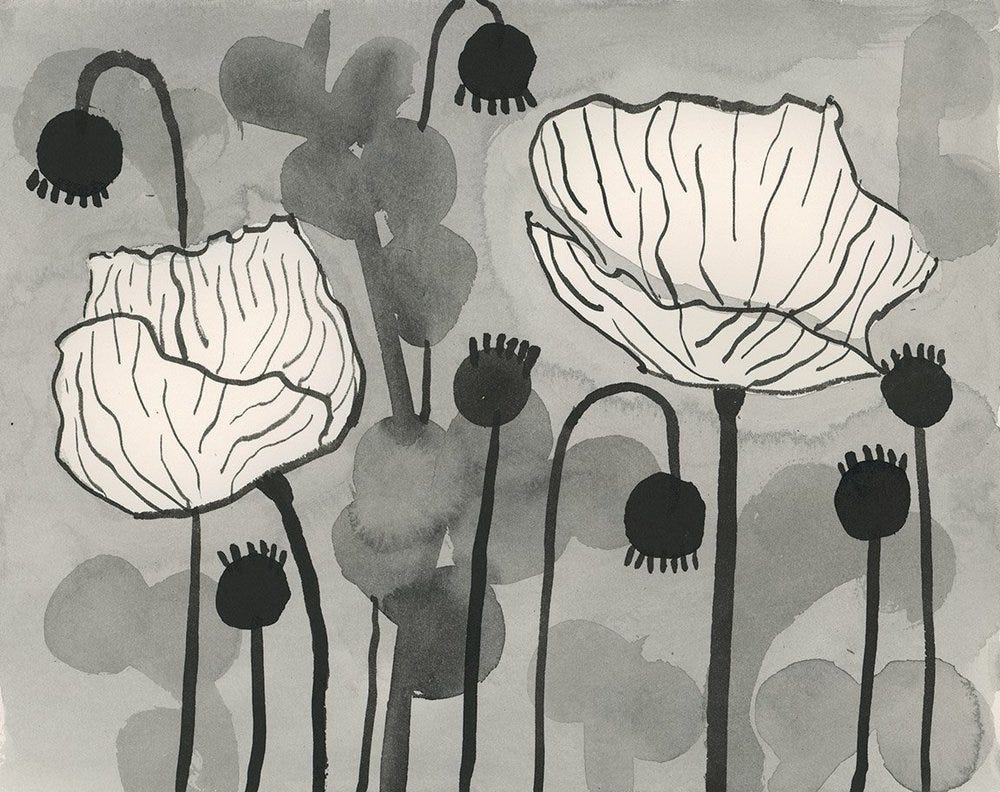
CAE 64’s featured artist is Tucker Nichols an artist based in Northern California whose work takes many forms, from paintings, drawings, sculptures, and mail art, to books and installations. His work has been featured at the San Francisco Museum of Modern Art, the Denver Art Museum, Den Frie Museum in Copenhagen, and the Asian Art Museum in San Francisco. His beautiful and ongoing multimedia project, Flowers for Sick People, can be viewed here. You can also find him on his website and on Instagram.

The most interesting things I read this month
Start here:
Start here for my faves, then fill up your browser tabs with the pieces below.
✈️ I Wanted to Be Anthony Bourdain—Until I Met Him. What a beautiful, heartfelt read. Cailey Rizzo writes about how as a young travel writer struggling with addiction and suicidal ideation, she idolized Anthony Bourdain not only because of his work but also because he seemed to embody a life of restless intensity and emotional detachment that mirrored her own feelings. She describes chasing a “Bourdain-style” existence through constant travel, reckless behaviour, and the belief that burning brightly was synonymous with living fully. She discovered, as many long-term travellers do, that you can’t outrun yourself no matter how pretty the scenery or delicious the food. Via her work, she was also able to interview Bourdain herself more than once. (I loved her line about how he was uncomfortable during the interview, which she felt was fair because “I think the only people who are fully comfortable with journalists are almost always narcissists.” lol. lmao, even.) In recovery, Rizzo came to value (as she notes Bourdain himself valued) sustained curiosity, even in the most ordinary of places. Sometimes being fully present with the people you love, and who love you, is more sustaining than the endless pursuit of something, somewhere far away. Cailey’s Substack
🍞 Scientists Made Sourdough Bread With Yeast Found on Ötzi the Iceman’s Mummified Body. WHAT COULD GO WRONG! Researchers studying Ötzi the Iceman, a 5,300-year-old mummy who was discovered in the Alps in 1991, recovered cold-adapted yeast strains from his remains and used them to bake an actual loaf of sourdough. It took three months of trial and error to get the recipe right, which I guess makes sense for sourdough made from a 5,300-year-old corpse? The ancient yeast not only survived for millennia, but it could tolerate and break down phenol, a preservative used during Ötzi’s conservation. Scientists think that this may have future applications in environmental cleanup, which is great and all, but genuinely, I don’t know how this isn’t an Onion headline. Science always surprises us, in a myriad of ways. Smithsonian Magazine
🌻 I’m 38 and I Can’t Support Myself Anymore. There are too many quotes I want to share from this piece, so please go and read the whole thing. I was never someone who half-assed anything (I joke that I’m a “full-asser”), and becoming profoundly disabled felt at first like I just wasn’t trying hard enough. It took a lot of introspection and therapy to unpack the fallacies in that belief. Vox’s piece elucidates this trap, and so much more. Two quotes, among those that resonated: “We’ve been using our productivity as proof of our worth for too long now. I don’t think it’s accidental that so many of us experience unemployment or disability as a kind of moral failure.” And: “Invisible illness creates its own form of social suspicion. If you are not visibly disabled enough, people are always searching for signs that you’re exaggerating. You don’t look sick. You looked fine yesterday. But you posted online. But you went to dinner once. But you smiled in that photo”. People love to ‘gotcha’ those with invisible illness (even the occasional physician), despite that most of us would give our eyeteeth to be healthy again. Note: the sunflower emoji used here is because sunflowers symbolize invisible disabilities. itsmevox’s Substack
🪸 The Corals That Shouldn’t Exist. An interesting look at coral colonies in PortMiami that somehow thrive in conditions that should, at least by general reef ecology rules, kill them. This includes living in warm, acidic water, which other species of coral would not survive. “There’s just something about Miami,” notes a scientist in the piece. Colin Foord, a marine biologist who founded the nonprofit Coral Morphologic, partnered with NOAA to help scientists understand why these corals are so resilient. The preliminary answers, including what the corals are eating and the algae that cohabitate with them, may help researchers support other reefs that are dying out due to climate change and bleaching. bioGraphic
😷 Researchers Affirm Long-Held Belief That Viruses Can Trigger Parkinson’s Disease. I’ve been saying this for years here in CAE: getting a virus doesn’t “strengthen” your immune system and may actually cause long term damage. In a new study, researchers from Texas A&M successfully developed the first virally induced non-toxic model of Parkinson’s disease using a mouse pathogen called Theiler’s murine encephalomyelitis virus (TMEV). The pilot study showed that a transient viral infection can trigger long-term brain damage, dopamine depletion, and physical walking disabilities in mice that are observed in human Parkinson’s patients. It’s a short write-up but I’m including it in the “start here” section because some people think I’m nuts for still trying to avoid getting sick. Setting aside the fact that any coughing can re-open my leak and destroy my limited quality of life, we know that viruses are potential fuses for additional dysfunction, including for some later-in-life neurodegenerative diseases. It’s not a guarantee, since viruses are highly selective saboteurs! It also depends on our individual genetics. But I don’t have the most faith in mine, given all that I’ve learned in the last 9 years of leaking. Texas A&M Today
🏔 Led Astray. From the opening line of this essay (“My father almost killed my whole family twice in one year”) to the horrifying story that unfolds, this deeply personal piece is a beautifully-written and emotional read. It focuses on Elle’s father as a “King Baby”, a man who “commands the authority of a despot while behaving like a spoiled toddler”. His family, including Elle, are all subjects—and subject to the whims of his fury. When he is displeased “hell rains down” on the lot of them including via reckless, over-confident and cruel behaviour in the wilderness that puts their lives at risk. Elle Kamihira’s Substack
🐦 Pigeons Can Distinguish Cancerous Breast Tissue From Normal. This is from 2015, but I found it again and wondered what happened following this trial? The title is surprising, but that is what the study found. Trained pigeons can be taught to spot malignant versus benign tissue in mammogram images with an accuracy that rivals trained radiologists, at least under lab conditions. We used pigeons in earlier wartime eras and discarded them, but they still excel at visual pattern detection. A second piece from this year goes into the ’why’: they’re great at pattern detection because of their view in the air. As they fly, pigeons constantly take in landscapes, which (like mammography slides) are “crowded, patchy worlds of color, texture and irregular boundaries.” Also: WHY IS THERE NO PIGEON EMOJI? University of California; ZME Science
🫖 Serving Biscuits in God’s Kitchen. Lovely writing about sobriety and service via an anonymous piece about serving tea and biscuits at AA meetings in the UK. “The secret to good AA tea is the same as the secret to good bartending,” the author notes, “you have to remember the regulars’ orders.” It’s a different perspective to AA meetings, one I haven’t read about before. Vittles (Substack)
🍽 I Fed the People Building the Metaverse. Speaking of food: a former Meta campus pastry chef’s account of catering to the engineers building the metaverse (and, later, AI). She writes that the sexism, ego, and disconnect from the world they lived in that she witnessed are baked into the technology those same people are now building. AI doesn’t pop out of a vacuum, it emerges from “the same mediocre management structures and ego-driven cultures already running the rest of society.” Metaverse excitement has mostly faded, but the people and the other products they’re building live on, convincing themselves that they are inventing the future while “reproducing every flaw of the present”. (Something I did not know before reading this was that while adults lost interest in the Metaverse, at the time of writing it still attracted more than 700 million monthly visitors, tens of millions of which are kids.) Yeast Confections (Substack)
⚽ The Dream Factory: Inside the ‘Cruel’ System Behind Argentina’s Soccer Empire. A deep dive into the system that produces world-class soccer players in Argentina, including the brutal winnowing process that these boys go through (some as young as six!) where only a small fraction make it to the big leagues and many deal with the long-term impact of being taken from their homes. Argentina realized in 2018 that “beneath the country’s intense passion for fútbol” was a whole underworld of young people in custody of adults who weren’t their parents. Thousands of vulnerable children faced sexual predation, but also extortion, hunger and neglect. Many of the boys were lured from Argentina’s interior, where up to 1/3 of the population lives in poverty. A tough read about predatory behaviour and the system that created it. ESPN
💊 UT Health San Antonio Identifies the First Potential Probiotic Treatment for Lupus. Researchers from UT San Antonio identified a specific gut bacterium that appears to be depleted in the microbiome of lupus patients, called Faecalibacterium prausnitzii, or F. prausnitzii. When supplemented, it “greatly reduced markers of the disease in animal models”. This is early stage research (and in animal models only, thus far!) but if it pans out, a probiotic-based treatment option would likely make a lot of patients happy who are stuck on immunosuppressants and other heavier meds. Note: this isn’t a strain currently available in commercial probiotics. UT Health San Antonio
♾️ The Gentrification of Level 1 Autism. Interesting critique from the viewpoint of an author who is an ‘actual autistic’ (as someone calls him in the piece). He notes that social media and online writing have diluted the designation of autism such that people are identifying as autistic though they wouldn’t meet a clinical diagnosis. The essay is part book review, part general complaint: “Most of [these people] show none of the signs of autism, do not look like their peers, do not share common experiences, do not think like them, do not react similarly to them, and do not have to deal with any of the impairments that come with autism. They are nonetheless very excited to tell you all about autism, their autism journey, and especially about how they’ve finally learned to unmask and embrace their unique autistic life which while marked by trauma, anxiety, strife, and hardship is conspicuously lacking the telltale signs and obvious marks of autism”. Online discourse often loses the precision that long-form media can offer, so perhaps that is part of what’s happening here? While I am not myself diagnosed as autistic, for what it’s worth friends of mine who are strongly agreed with this piece. Dispatches from the Autism Wars
🗣 “Among the New Words”. Tracking new words that enter the North American language, with lexicographic sourcing for each. In this edition, the defining linguistic trend is the rapid influence of AI, social media, and internet culture on everyday English. Basically, what several other pieces in here argue. Word of the Year selections include slop, vibe coding, rage-bait, reheat[ed] nachos, lowkirkenuinely, and more. Unlike other new word lists, the editors dig into where the words are coming from and how they became part of the zeitgeist. Heavily referenced post. Duke University Press (via Nancy Friedman, who authored the ‘vibe-coding’ write up).
🌶 Chili Peppers of the World: Cultivars, Species, and Heat. SO FUN! A visual field guide to the chili peppers of the world, from wild origins to cultivated forms, illustrated with 176 hand-drawn peppers. Seriously beautiful and creative. I used it to update my A Brief History of Chili Peppers post on LN. Notes From the Road (via Kottke.org)
🔮 ‘David Bowie Was a Crazy Workaholic’: Labyrinth at 40 – an Oral History. The cast and crew look back on the making of Jim Henson’s 1986 fantasy film, Labyrinth, which was a beloved (and frightening) film for many childhoods, including mine. The movie was initially a box-office bomb, but over time became a beloved cult favourite thanks to its combination of Henson’s chaotic, magical puppetry, David Bowie’s amazing (ahem, frightening) Goblin King, and the emotion of adolescence. Cast and crew recall the challenges of working with elaborate puppets, Jennifer Connelly’s professionalism even though she was only 14, and Bowie’s warmth and (as the title suggests) intense work ethic. For me, a very nostalgic read! The Guardian
💩 The Shape of Enshittification. Why exactly are we in a content race toward enshittification? AI-generated content, and increasingly the internet itself, are morphing into output purely driven by statistical patterns and algorithmic optimization and not human curiosity. Even books are becoming more formulaic because publishers increasingly rely on proven commercial templates. Social media feeds aren’t about actual exploration any longer, despite calling it an ‘explore’ tab; everything is instead about maximizing engagement. And as we’ve discussed here before, search has increasingly moved from helping people actually discover information to keeping them inside a walled garden. We’re caught in a shitty feedback loop, writes Ryan Levesque: AI was trained on an internet that had already become pretty homogenized through obsession with algorithms, and now it generates more of that same content and feeds it back into the internet. Enshittification, coined by Cory Doctorow to describe the rapid decline in the quality of digital life and online platforms that we’re experiencing, is very much the norm. More and more content is optimized for engagement metrics instead of originality or depth, leaving the internet feeling increasingly repetitive, predictable, and bleh. The Digital Contrarian (Substack)
🧬 Spontaneous spinal CSF leaks: a rare variant exome sequencing study and functional analysis. A very niche read related to my own condition, but I am excited to share this summary of how Cedars-Sinai, the Hal Dietz lab, and Dr. Cassie A. Parks used whole-exome sequencing to identify patients with mutations in a gene called FBN2. This gene helps the body make a component of connective tissue called Fibrillin-2. Hopefully a finding that will be expanded upon to help explain why some patients develop spontaneous spinal CSF leak, or why some (like me) can’t get sealed. The Lancet Neurology
😡 The Wholesale Plagiarism of Obscure Sorrows. Andy Baio reports on how marketing agency Qontour created an unauthorized website for John Koenig’s beautiful book, “The Dictionary of Obscure Sorrows”. I love this book so much and have shared it previously. The new site is built to look like an official site and they basically copied the entire contents of his book (all of its words, definitions, the essays that went with them) while replacing the original artwork with AI-generated images. They also added tools that allowed visitors to create new sorrows. The creators claimed it was a fan tribute, but this far exceeds any fair use, and Koenig said he had no involvement or knowledge of the project. The site also monetized traffic through Amazon affiliate links, ranked above the official website in search results, and confused ChatGPT and Gemini into thinking it was the ‘official’ site. “The feeling of seeing something you love ingested and repurposed by a machine designed to replace the person who made it seems like a uniquely modern sorrow,” notes Baio. After this post and criticism, Qontour wrote Baio to say they removed much of the copied book content and changed some of the site’s features. Waxy.org
👓 The Glasses on His Face Can Pull Your Home Address in Seconds. One of many pieces about Meta glasses and how they, and other consumer smart glasses, can be used nefariously alongside public records databases to let a stranger identify you. This includes your home address, your online life, and levels of surveillance that Jermaine Fowler argues in this piece all outpace any meaningful regulation. The result is a privacy crisis, one that creates a danger for victims or potential victims of stalking, abuse, and more. Over 70 organizations, including the ACLU, EPIC, and Fight for the Future, say that when combined with facial recognition software, these glasses could give stalkers, abusers, and federal agents the ability to silently identify strangers in public. A primer on these glasses here, for more. Ultimately, it seems unlikely that this technology will be fully shelved. Especially in a culture of political impunity. The Humanity Archive
🦀 Scientists Discover 149 New Marine Species Off Remote Australian Islands. Researchers from Museums Victoria, CSIRO, and the Australian Museum catalogued at least 149 previously unknown deep-sea species around Christmas and Cocos (Keeling) Islands, collected from more than 1,000 specimens across 22 underwater mountains. At the link, a shorter post with some wondrous photos from the depths, including some very trippy starfish and an adorable sponge crab. ABC News Australia
🎙 Andrew Tate’s Empire of Abuse (archive link). New Yorker staff writer Heidi Blake’s investigation into how Andrew Tate built a human-trafficking operation that exploited women through coercion and psychological manipulation while using online algorithms to spread misogynistic ideology to millions of young men. This is a very long piece, heavily-sourced with court records, investigative files, interviews of Tate, his brother Tristan, and numerous alleged victims. Tate has created what he calls an “empire of exploitation” around hatred and utter contempt for women, disseminated to an incredibly wide audience and with many supporters. His influence has shown up in classrooms, in homes, at dinner tables, and poisoned relationships, leading to real world violence against women. The New Yorker
🍷 A U.S. government study found alcohol risks, but new guidelines don't include its findings. A federally-commissioned report on alcohol’s health effects that was excluded from consideration in the latest USA dietary guidelines after political and industry pushback finally got published independently. Its findings mirror the research I’ve shared in past CAEs: even low levels of alcohol consumption increase the risk of death and serious illness, with no clear net health benefit from drinking. These include increased risks of cancer, cardiovascular disease, and liver disease. Very different to the ‘one daily drink may be protective’ advice we used to read about. The U.S. Department of Health and Human Services now argues that the independently published paper is not identical to the original government report reviewed for the guidelines, and insists that nothing was omitted. That account conflicts with one of the researchers involved, who says they were told to “kill the study” by the current administration. CBC News
The rest of the most interesting things I read this month:
🤖 Stop AI-Shaming Our Precious, Kindly Em Dashes—Please. As someone who loves em-dashes, and used them ALL THE TIME until AI became so ubiquitous but I’m now self-conscious about doing so: relatable read. The Ringer
🧠 Women With Traumatic Brain Injury 26 Per Cent Less Likely to Receive Trauma Care Than Men, Ontario Study Finds. A decade-long Ontario study of over 55,000 patients found women with traumatic brain injuries were significantly less likely than men to be admitted to specialized trauma centres, even after controlling for age, health conditions, and injury severity. Depressing and unsurprising. Researchers suspect that because triage criteria are built around how TBI presents in men, it means medical professionals are under-recognizing symptoms like confusion or word-finding trouble in women. As someone who was told I was “stressed and maybe needed anxiety medication” but I actually had a spinal CSF leak, I suspect more is at play than just symptom recognition. CBC News
🖨 Can Printed ‘Skin’ Help to Heal Burns Without Scars?. A very cool read about how bioprinting technology that layers a patient’s own skin cells onto burn wounds may be used eventually to regenerate skin instead of create scar tissue. This process essentially uses inks that are built using a patient’s own cells. Excited to see where this goes! Knowable Magazine
💡 Harari vs. Henrich. Philosopher Joseph Heath contrasts Yuval Noah Harari’s popular account of human evolution in Sapiens with anthropologist Joseph Henrich’s research. Harari’s account emphasizes the emergence of uniquely human cognitive abilities (especially language and shared imagination) as the foundation for cooperation and culture. Heath argues that Henrich’s cultural evolution framework reverses things: Henrich suggests that cumulative culture and increasingly sophisticated social learning created a feedback loop where humans became better at copying, preserving, and improving knowledge across generations. Then, over time this cultural process shaped human psychology, cooperation, language, and intelligence. Humans did not succeed simply because they were individually smarter than other animals and then created culture. Instead, they became uniquely intelligent via a process where accumulated culture created evolutionary pressures for brains capable of sustaining and expanding it. While Henrich’s framework also has criticism, Heath’s essay notes that while Sapiens is engaging and influential, its sweeping “big history” narrative may oversimplify the complex evolutionary processes that made humans human. In Due Course
👁 “Everything, Everywhere, All at Once Surveillance”: Your Questions Answered. A legal expert on digital surveillance answers questions from Bolts readers about how police track personal data in the USA, and what public officials could be doing (but often aren’t) to restrict it. Bolts
🚁 Fireworks aren’t patriotic. Drone shows are. This piece looks at the tech and companies behind drone shows, from early options at Burning Man to more recent and elaborate productions at the Vatican and elsewhere. It’s more philosophical than expected; the slug is “i-found-jesus-at-a-drone-show”. A lapsed Catholic, Sheon Han writes of the collective awe from thousands of synchronized drones telling a familiar biblical story, a visceral feeling more intense than the sermons or paintings from his youth. New technologies can become new artistic languages, sometimes good and sometimes bad. In this case, as fireworks are increasingly an issue for the environment, for Veterans, and for pets, replacing them with these drone shows as a different version of creative tradition during big events may be what society ends up doing. WIRED
📂 Inside the World of Jeffrey Epstein’s Assistant. A profile of Lesley Groff, Epstein’s longtime executive assistant who I hadn’t heard much about in prior reporting about his predatory empire. She may not be legally complicit in the crimes he committed, but how do we as a society handle people who are morally complicit? Using records, including thousands of emails, FBI interviews, and court documents, Sophie Elmhirst portrays Groff as an exceptionally competent assistant whose job was to manage every aspect of Epstein’s life, including arranging meetings, travel, payments, and appointments for young women. Groff maintains that she knew nothing of his sexual abuse. The Guardian
🔴 ‘Love Island’ and the Mirror of Red Pill Ideology in Modern Dating. There are plenty of online opinions about whether Love Island, a hit show in the UK for many years, is ‘worthy’ of watching. Season 8 of the USA version just ended, and it has been the top show on Crave and Peacock all season long. This piece argues that the reality dating show, rather than being trashy escapism, is a sociological case study. In this season particularly, the author notes that there is a focus is on how red-pill dating ideology that has seeped into how ordinary young men and women approach dating on camera. Her Thoughts Exactly
💵 5 Unexpected Ways I Make Enough Money to Survive While Ridiculously Ill. Kira Stoops with a long and helpful breakdown of the patchwork of strategies, microbusiness income, cheap housing, family help, aggressive bill negotiation, and more that keeps her financially afloat. She notes that much of it depends on privilege and luck as much as resourcefulness. Imperfect Working Order
📚 250 for 250 Booklist. For America’s 250th anniversary, Brooklyn Public Library created a thoughtful booklist (organized by genre and category of interest) of the 250 most influential books in USA’s history. Their list includes fiction, nonfiction, and everything in between. Brooklyn Public Library
🏳️⚧️ She Changed Her ID to Comply With Kansas’ New Anti-Trans Law. Now, the State Is Trying to Put Her in Jail for Having an ‘Inaccurate’ License. A Kansas trans woman is being charged with driving with an invalid license after a police officer refused to believe the license the state is forcing her to carry was valid. She won’t be the last, and it’s one of many ‘gotcha’ traps that are being set for this vulnerable population group. Transitics News
🦠 Revisiting the Painful Truth of Long COVID. WIRED magazine published a frustrating and condescending post about Long Covid that suggested the condition could be treated via brain retraining. This is Todd Davenport’s point-by-point rebuttal to that essay. He extensively cites the growing literature about the condition, including evidence of mitochondrial and immune system dysfunction. Unlike the WIRED piece, he notes that patients avoid exertion because it makes them measurably worse. And not because of maladaptive fear. As someone who has been told to just fight harder with a different condition, I was happy to see this science-based rebuttal. Todd’s Substack
🇫🇷 Things the French Find Completely Bizarre. An American expat in Aix-en-Provence gives us a short and entertaining list of cultural things that Americans do that baffles the French. The list includes oversized water bottles, anticipatory smiles, eating on the go, loud public conversation, and America’s general obsession with being busy as a personality trait. Why the disconnect? France values moderation and ritual and social cohesion, with smaller fridges and narrower store hours and leisurely meals. Americans focus on maximizing efficiency in all ways. This is part of the fun in experiencing the world, to get to know a country and its way of being with humour and lightness just as the author does in this piece. Kimberly Wheeler’s Substack
💲 Behind Polymarket’s Paid Influencer Campaign. A POLITICO investigation found that prediction market Polymarket’s chief marketing officer sent over $2.5 million to more than 800 people via his personal PayPal account, including social media influencers across the political spectrum, many of whom then promoted the platform without disclosing they’d been paid. The recipients ranged from conservative commentators to a Defense Department official’s spouse. “The paid influencers’ posts about Polymarket often drew attention to specific bets by using language that framed betting odds as news developments,” the article notes. PolyMarket declined to explain its ‘influencer strategy’ or its use of personal accounts for payments. POLITICO
💩 Alert: Cyclospora cayetanensis: Multistate Outbreak with Midwest Epicenter. You’ve definitely heard of the Cyclospora outbreak if you’re living in North America, but if you’re from elsewhere (or unaware): it’s a parasite that causes explosive diarrhea, and CDC removed surveillance of this parasite from FoodNet last year. It has caused thousands of cases around the USA thus far, and the CDC hasn’t been able to track the source of the outbreak(s). Prior outbreaks were from lettuce, or berries (it hides in the crevices of produce), and washing your produce doesn’t get rid of it though does lower the contamination burden. You need to cook it to kill the parasite. This piece is a very thorough primer on the parasite by Gage Moreno and Caitlin Rivers. It’s from July, but given that the outbreak continues to grow, I wanted to share it now. FOI Clinical
🔗 Quick links
Rest in Peace, Om Malik.
Giant banana car is pulled over - again - in Montana. (via Kottke)
Nearly 10,000 Lose Power in West Island as Storms Sweep Across Montreal. Part of why this CAE is late: my mum’s place was flooded last month, and many of my belongings (travel souvenirs, photos, my framed law degrees, expensive items from my lawyering days that were there for safekeeping) were among what was soaked with sewage water, and now discarded.
What a headline: Enemy lesbian nuns quit their respective convents and married each other.
A runner-up for headline of the month: “Mussolini’s Granddaughter, 63, Wins Italy’s Celebrity Big Brother: ‘I Regret Nothing’”
How a cluster of unlicensed food trucks took over D.C.’s National Mall.
“Apple’s weird anti-nausea dots cured my car sickness” - very interesting, and definitely keen to try this myself!
Fog is full of bacteria, apparently!
Hope you enjoyed these links! See you next month,
-Jodi
Congratulations on your published article! Wow!
What a rich list. Your summaries are so excellent. I don't understand where you find the capacity to write so generously. Bravo. And also on your published article.☀️🧡